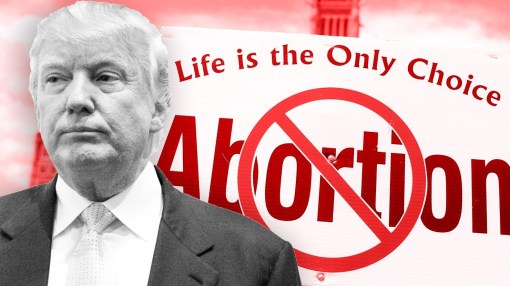
Pro-Life Idolatry

29 05 2018

It’s an interesting statistic. First coming to my attention back in the early 2000s in a Christianity Today article, it was recently confirmed again in a 2018 essay by researcher Krissi Danielsson.

As many as 75% of fertilized eggs never result in full-term pregnancy!

Yes, that’s right!! That’s the statistic that has dramatically altered my thinking on life and abortion. Three out of every four conceptions never results in pregnancy or birth.

When I first read it, I remember thinking that if life really did begin at conception, why did God allow so many of those ‘knit together in their mothers’ womb’ to never experience the blessing of living? Is it possible that eternity really is going to be full of ‘people’ who have never enjoyed life in this world?

It just didn’t make sense. Perhaps ‘life’ does indeed begin at conception, but is it human life? . . . life just like yours and mine? . . . life worthy of the exact same rights and protections? I’m not sure. Those things come somewhere between conception and birth; but where, none of us know.

Thus began my long and winding journey trying of trying to figure out where I stand on the subject. My denomination, the Presbyterian Church (USA), has worked hard to stand in the tension, maintaining that “in life and death we belong to God.” We have been bold in proclaiming that life is indeed a gift from God, and that it should always be preserved and protected.

At the same time, we also realize that a woman’s decision to terminate a pregnancy is intensely personal, and that like anyone else struggling with a moral decision, women need to be given the right to determine how the Spirit is leading them. SHE needs to be the one to read and interpret Scripture; and then in light of her own faith and walk with God, SHE needs to be guaranteed the right to make that decision for herself

Admittedly, such ‘situational ethics’ may not always lead to good decisions; but when it comes to abortion, where so many ‘people of good faith’ disagree, we must err on the side of grace. Like gun control, capital punishment, and even war — issues involving moral imperatives are often far from black and white. They are more gray they most of us would like them to be. And when it comes to abortion, because there is so little consensus, we need to be willing to live in the tension that exists within the Body, and leave the choice to the pregnant woman.

Ironically, today, the abortion rate in America is as low as it was prior to Roe vs. Wade, and it continues to decline. 90% of all abortions take place in the first trimester of a woman’s pregnancy; and in spite of the recent action in Ireland to legalize abortion, younger generations around the world appear to understand that abortion it is not a means of birth control. People DO value life, and are fully aware of the serious nature of the decision to terminate a pregnancy.

These are all positive signs, and all are taking place without reversing any action taken by the Supreme Court. People in our country are given the freedom to make their own decision about life; and because we are so divided on the issue, those against abortion are not forced to have one, and those who for some reason make the decision to end their pregnancy have the freedom to do so.

I’ve been thinking about abortion a lot these days, because for countless ‘evangelical’ Christians, changing America’s abortion laws is their primary political objective. Their on-going support for our current president, as well as his administration, comes down to this one objective; and everything else is secondary. Other issues may weigh on their minds, and many of these Christians are quick to adopt the agenda of the political party that Donald Trump represents; however the 2016 election was, in the end, all about the lesser of two evils. And the lesser of those evils was determined by which candidate would alter the Supreme Court in a way that might overturn Roe v Wade.

But here’s the thing, abortion is simply too ‘grey’ for such a choice. And when considered alongside everything else that has been sacrificed, the choice to elect Donald Trump for ‘Christian’ reasons can only be justified by a bastardized reading of the Gospel and by the idolization of so called ‘pro-life’ politics.

As has been pointed out for years, far too many Christian ‘pro-lifers’ are . . . not! They are anti- abortion, but they are not pro-life. And their commitment to only protect and care for life ‘in the womb,’ denies the most bascic Biblical teachings about human life and our call to care for the most vulnerable among us. Forcing women to bear children against their will, and then punishing those women and children by not making sure they are provided for is hypocrisy at best. Leaving such families wanting is not ‘teaching’ them, nor is it ‘motivating’ them, to take responsibility for their decisions. It’s punishing them, nothing less. And it in no way reflects an attitude that even comes close to the ‘valuing’ of human life.

Further, maintaining the provincial and unnatural position that abstinence is the best form of birth control, also denies any theologically or psychologically sound understanding of sexuality. And denying or restricting access to contraceptives, or to resist sex education is schools for whatever reason – from ‘that’s a parent’s job’ to ‘it will encourage pre-marital sexual activity’ – only exacerbates the problem by perpetuating a puritanical and grossly misguided understanding of one of the most meaningful forms of physical expression.

I am willing to recognize and that Republicans, Independents, and even some Democrats had valid reasons for electing Donald Trump. But Christ-followers who did so solely because of their pro-life passions, have made an idol of their politics. And the Church of Jesus Christ must name such heresy, and resist it again, and again, and again.


Christian ‘Radicalization’

20 05 2018

BlogIt was an “Invisibilia” podcast from July 15, 2016 titled ‘Flip the Script.’  Transformative in many ways, the content was designed to lift up the importance of fighting hate with love, judgement with grace, and exclusion with acceptance. At one point, when considering the radicalization of young, Muslim men in Denmark, it was suggested that they are not being radicalized in Mosques, but in their social circles.  There, a vastly different message is being given.  Nothing is being ‘flipped”; and instead, the impressionable young are being taught to meet hate with hate, judgement with judgement, and exclusion with more exclusion!

Now the vast majority of Mosques, in Denmark and around much of the west, ARE teaching a faith that is full of love, grace, and acceptance – teachings that are not all that unlike the teachings of most historically ‘mainline’ Christian Churches.  But the social lives of the radicalized include vastly different teachings; and I would contend this is true not just of Muslims in Denmark, but of Christians in America.  Radicalized Muslims and Christians are NOT living out distorted and flawed expressions of their faith because of what they are hearing in their Mosques and Churches.  Rather, they are becoming radicalized because they are not listening to what is being taught in their Mosques and Churches.

Now to be clear, there are many churches in America teaching a Gospel that is not at all reflective of the life of Jesus.  And ‘radicalized’ Christians from those congregations are indeed frightening.  But by far, most churches in our nation are doing a fine job of teaching people to love God and neighbor; to care for widows and orphans; and to “seek justice, love mercy, and walk in  humility.”  Do we have our issues?  Of course we do.  But in most instances, I still believe the Church of Jesus Christ to be ‘the hope of the world.’

So what is the source of America’s ‘craziest’ Christians?  Are they coming from America’s craziest churches?

I think not.  And that is the primary problem with American Christianity.

Most American Christians today know little, if anything, about the life and ministry of Jesus.  They have been blindly led to believe that Christmas is about his birth to a virgin named Mary, in a stable, with angels singing in the heavens and shepherds nearby with their sheep.  And they have been naively told that Easter is about his body being raised from the dead, evidenced by his friends finding an empty tomb three days after his crucifixion.  But that is the extent of their knowledge of Jesus.  And most know even less about the Bible.  They spend little, if any time, studying faith or spirituality.  And while perhaps ‘members’ of a local congregation, they rarely darken the doors of those churches, and thus they fail to ever really connect with a faith community that might help them to grow and expand their knowledge of God.

Most American Christians are pretty clueless about our faith.  And it pains me to say that.  But after 32 years of ordained ministry in the PC(USA), by far, the majority of the members of the Churches in which I have served – not all, but a majority! – spend more Sundays out of worship than in worship, and they never attend a Sunday School class or Small Group to help in their spiritual formation.  Membership in a local faith community is treated like membership in some kind of social club – where they have a chance to visit with friends, sing some of their favorite songs, and enjoy a cookie and a cup of coffee . . . that often is not even very good.

So is it any wonder that American Christians are so misguided when it comes to matters of faith, and the way of Jesus?  We’re no different than the radicalized Muslims in Denmark.  And while we may not be blowing up buildings, or driving our cars onto crowded sidewalks; too many condone the evils of colorism, sexism, and lying.  And too many continue to support a president, an administration, and a devolving political party that violate the most basic of Christian values, and deny the way of the Christ.

“Radicalized” American Christians, which apparently are most American Christians, need to get themselves into a church; because in the shadows of America’s so-called Christian sub-culture, they are learning little, if anything, about the One they claim to be following.


Tiring talk of ‘Purple’

10 04 2018

purple

I’ve written on this subject before, but because it refuses to go away I am compelled to address it yet again.

Well meaning people everywhere are doing their best to encourage healthy and meaningful conversation between people who disagree on the variety of issues being continually instigated by the Trump administration. Journalists, professors, and politicians of every ilk are challenging people to embrace a more civil form of dialogue, particularly when encountering people with whom they may disagree. Because polarization in our nation appears to be growing by leaps and bounds, the message of many is all about learning to bring civility back to our national conversations: understanding other points of view, and coming to the realization that sometimes . . . “opinions aren’t right or wrong, they are just different.”

This is particularly true in America’s Christian community, where much is being written about what it means to be a ‘purple’ church and how congregations made up of both Republicans and Democrats need to learn how to have difficult conversations and still maintain the bonds of unity and peace. And who can argue with such sound advice?

The beauty of creation is indeed found in its diversity, and cultural differences reveal the vast and expansive nature of the Creator. Things are rarely as black and white as we’d like them to be, and so learning to get along with people who think, act, and believe differently than we do is part of what it means to be a member of the great human family. It’s the only way any of us will ever grow.

Which is why for years, such conversations have been an important part of my own spiritual journey. Muslim sisters and brothers have taught me a great deal about prayer and devotion; and the lives of many of my Jewish friends have modeled for me what amazing grace and forgiveness look like. The people of color God has put in my life have taught me volumes about the colorism of our nation, and what it means for me to become an ally in the quest to end white supremacy. And politically, I have always been eager to dialogue with people of a different persuasion than I; discussing everything from the size of government, to capital punishment, to the separation of Church and State.

Such purple conversations, or issues, involve matters where there is acceptable disagreement and perspective. We also call them gray areas, for which there are no single, or easy, answers: like how to negotiate peace in the middle east, or how to better care for the planet. Solutions to such problems are likely found somewhere between the positions of the blue left and the red right; and they require us to embrace differences of opinion and to develop the art of compromise. This is what makes congregations, or communities, purple.

But these are not the issues dividing America today, nor are they the cause of the polarization that continues to grow in our country. The issues dividing us in 2017 are different, and they are not the least bit . . . purple!

Sexism, gender bias, and misogyny, are wrong. Colorism, white supremacy, and inequality, are wrong. Lying, knowingly spreading false and misleading information, and name calling – are all wrong. These are the issues dividing America today, and there is nothing purple about any of them! They are not conservative or liberal. They are not red or blue. They are not Republican or Democrat.

For almost 250 years this country has flown a red, white, and blue flag; but when it comes to certain issues and practices, we’ve spent way too much time trying to color them purple – implicitly or explicitly, consciously or unconsciously, intentionally or unintentionally. And much of today’s outrage is born in this reality. There are some things that some of us are no longer interested in debating. And while we will love those who embrace such distorted worldviews, and while we will care for such people and even be in relationship with them, we’re not interested in discussing such issues with them anymore. Any conversation or behavior on our part, that in any way gives the appearance of our legitimizing certain stances and opinions, or that makes them appear to be acceptable options for average Americans, condoned by either people of faith in specific, or US citizens in general – is no longer an option for us.

We have a President with a blatant disrespect for women, that is rarely condemned by his supporters. When woman are involved, he continually fails to take responsibility for his abusive, abrasive, and offensive behavior: behavior that has led him to two divorces, and to more than a dozen charges of sexual assault and harassment. And even when evidence of his misogynistic ways abounds, he proceeds to attack his accusers, as well as the media reporting on his ‘locker room’ behavior. His inflated ego does not allow him to own his flaws, and far too many of his supporters are willing to overlook them simply because they think he is somehow going to further their political agenda. But ends do not justify the means, and conversations about such things is nothing more than a waste of time.

Hear again his own words when talking about women he finds attractive: “You grab them by the pussy!”

Read those words again, words that I am embarrassed to write: “. . . by the pussy.”

This is the attitude, perspective, and language, of the man too many Americans, and FAR too many Christ-followers, put in the White House!

How does one profess Jesus to be Lord, and then with those same lips try to justify such action? What is there to discuss?

And it doesn’t stop here. If the President’s misogyny is not enough, then consider his deep-seeded colorism. Whether talking about the Central Park Five in 1989, or his failure to name the evil behind the deadly riots in Charlottesville in 2017, we have a president who continues to display an attitude that is antithetical to the Gospel, as well as the best of the American soul. Whether simply playing to his base, or expressing his own sentiments, his ongoing words and actions reveal not just an ignorance around issues of colorism, but a resistance to acknowledging it as what some have named “America’s original sin.”

How much longer are we going to legitimate such evil by making it appear as though such ‘opinions’ or ‘attitudes’ are worthy of our consideration? White supremacist Richard Spencer doesn’t necessarily think Black people are inferior to White people, he just doesn’t want them in this country. In his mind, America was founded as a White nation and he and his followers simply want to keep it that way. And I get that. It’s really not all that difficult to understand. I don’t need to talk with him or anyone who thinks like him in order to better understand that attitude. Rather, I, and countless others, simply want to reject and condemn such a worldview. Period!

And when it comes to lying, and name-calling – that is example being set by our President; an example that even most third-graders know to be wrong. So again I ask: what is there to discuss?

These are the things that are being called out today, and none of them have anything to do with the color purple. Donald Trump’s sexist, racist, and lying ways are not worthy of anyone’s consideration, and people’s ongoing disbelief and anger over his election will not subside if we “just try to see things from a different perspective.” Such purple perspectives have been part of the American psyche for way too long, and they are no longer going to be allowed to exist without challenge. Continuing to debate or listen to people try and explain and/or justify sexist, colorist, or lying ways, does little more than condone such behavior.

Amos writes “Hear this word you cows of Bashan . . . who oppress the poor, who crush the needy, who say to their husbands ‘Bring something to drink!’. . . The time is surely coming upon you when they shall take you away with hooks, even the last of you with fishhooks.”

Since I am not a Biblical literalist, I will not recount the words of Ezekiel, Hosea, or John the Baptist: harsh words, born in a passionate outrage over injustice and immorality, all designed to call people back to God. Clearly, the name-calling in such verses do not represent the best of a community’s attempt to hold people accountable to a higher standard. However like Jesus’ turning over the tables of the money-changers in the Temple, Amos and others offer us a glimpse into a holy anger that is less about incivility, and more about a passionate discontent with systemic and societal sins that are an affront to God. And this is what is so evident in the vast majority of people that I know, who are speaking out against the Trump Administration.

For the past two years I’ve listened to countless people attempt to explain their support for this president. I’ve had far too many personal conversations with people who think that if others would just listen to their rational for voting the way they did, their actions would be understood – as if understanding will somehow lead to acceptance.

But when was the last time anyone had a debate about the merits of Nazism? When was the last time anyone thought it worthy to debate the burning of witches, or using chemical weapons? Sexism, colorism, and lying are no different. There’s nothing to try and understand. There’s nothing to discuss.

The message of the Scripture that I read calls my yes to be yes and my no to be no! So I will continue to say NO: to the unGodly ways of Donald Trump, to the attitudes of many in his administration, and to the worldview of so many of his followers. And let’s stop with all the tiring talk of purple. The issues before our nation today are issues that Americans have colored ‘purple’ for way too long.


Easter Reflections

30 03 2018

Founded in 1880, the Old Dominion Boat Club, in Old Town Alexandria, VA, is a fixture on the Potomac waterfront. Organized by leaders of Alexandria’s civic and social strata for the physical fitness of  men after ‘the war between the states’ (the verbiage used in the club’s writings on their history), the ODBC of today offers a marina, a tap room, and a variety of social events for it’s membership.

ODB2

Last month, the old boathouse that stood at the foot of King Street for almost 100 years was demolished, and the club has now officially moved into their new building at the foot of Duke Street, near the location where it was originally located more than 135 years ago.

ODB4

While the Boat Club’s move has been understandably difficult for many of it’s members, as well as for some long-time Alexandrians, in the long run I have no doubt the move will benefit everyone. The city of Alexandria will now prepare the lot on King Street for public use, as the OTX waterfront continues to be developed. The Boat Club will no longer be threatened by flooding, and instead enjoy the beauty of a spanking new facility that will last for another 100 years.

It’s a great Easter story isn’t it. New life! The old being finished and gone, and something new, beginning!

As far as I’m concerned, there’s nothing not to like about the boat club’s new building. It’s absolutely beautiful . . . not to mention the fact that the old site will soon be opened up for EVERYONE to enjoy. And when it comes to the newness that we celebrate at Easter, there really is nothing NOT to like there either. Resurrection is all about the promise of life’s victory over death; light’s victory over darkness; and love’s victory over violence. What’s there not to like about that? Who would not be happy living in a world where death, darkness, and violence had no power . . . where life, light, and love were the norm?

But in order for this newness to become a reality . . . OUR reality . . . something needs to die. The old needs to be ‘knocked down’ and hauled away. Yes, we certainly need to keep our eyes fixed on Jesus, so that we would bring health and wholeness to those who are dying around the world. We need to shed light on evil, and seek to put an end to violence, and war. But to do any of this, we first need to put to death the old life. And that is hard work.

Never the less, this Easter, that’s what I want to be about. I want to work hard to embrace the new, by working hard at tearing down old. And that means that I’m going to have to . . . yet again . . . take a long, hard look at my life, and deal with all the death, darkness, and violence that needs to be bulldozed. I’m going to take a wrecking ball to my harsh words, that tears people apart rather than builds them up; and I’m going to open my eyes to the injustice around the world that holds people back and brings people down. I’m going to spend more time doing things that bring life and light to my life, and that bring life and light to others, by avoiding those who preach hate, teach division, and embrace a worldview that is born in fear and darkness. And I’m going to haul away the violence that destroy’s my soul, and the souls of others – hatred, disrespect, arrogance, and condemnation.

All this ‘old’ stuff needs to go. It needs to be finished and gone; for only then, can the new life of resurrection come. Only then, will I be clothed in the garb of spring – that which brings life, and light, and love . . . to me, and to the rest of creation.

This Easter, that is my prayer for the Church, and for the rest of the world: that we might begin the process of receiving the new, by tearing down the old. This Easter, I want exchange bunnies for bulldozers, so the work of building a new ‘boathouse,’ might begin, in me!


The Immigration Double-Standard

7 03 2018

NYCYes! Whether we like it or not, whether we want to admit it or not, we are a nation of immigrants. A mere 1.7% of Americans self-identify as Native, which means that the remaining 98.3% of us can trace our lineage to other lands. Many of our fore-bearers came as conquering white colonizers; others were brought here against their will to be enslaved by Whites; and still others came because of the opportunities they believed were waiting for them in the ‘land of the free and the home of the brave’ . . . a ‘city set on a hill’ . . . destined to be a ‘shining light to all the nations.’

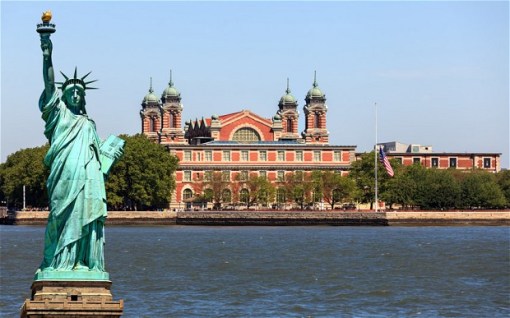
That is certainly the story of my family. My paternal grandfather left Italy for Ellis Island in 1923, on ship named “Patria,” when he was only 18 years old. He settled in Niagara Falls, New York where he worked as a crane operator for 41 years. My maternal great-grandparents also came from Italy, and they, like so many other Italians, opened taverns and worked in the restaurant business. Some of them, no doubt, enjoyed their ‘careers,’ but like most immigrants, they weren’t picky. They found whatever jobs they could, and did whatever the needed to do in order to put a roof over their heads and food on their tables. I’m not sure any of them actually dreamed of waiting tables and doing other peoples’ dishes – not any more than Chinese immigrants in Detroit dreamed of doing other peoples’ laundry, or Mexican immigrants in Southern California dreamed of picking other peoples’ fruit. But that was the work that was available – the work that no Americans wanted to do – and so immigrants stepped in. They worked long, and hard, and sought to be productive and responsible members of American society.

Inspite of being an introvert, when my grandfather socialized, it was likely with other Italians who had settled in Niagara Falls. They spoke Italian together, held onto customs and practices that reminded them of their home, and longed for that day when they would be reunited with their family. In time, Italian immigrants learned to speak English, and fluently; they came to appreciate hot dogs and apple pie as much as spaghetti and meatballs; and while not true of my grandfather, many of those in Niagara Falls did eventually bring their extended family to the ‘cataract city.’

It’s really not all that unusual a story. In fact it’s not just AN American story; in many ways it’s THE American story. But unfortunately, while it’s the story of so many Americans, it’s one that sadly appears to have been forgotten.

These are the stories that made America the great melting pot that it is today. I like to think of us as a great stew, with meat, carrots, potatoes, and if we’re lucky a few dumplings. We’re all unique, with our own taste and texture; but together we create something wonderful! Italians, Chinese, Mexicans, and countless other immigrants, along with America’s native people and African-Americans, all bring spice and sweetness to this country that we now call home. And whether by force, choice, or chance, we are all Americans. Each of us has different backgrounds, traditions, and even some stereotypical traits that have been appropriately assigned to us, but we are still united by our citizenship in one of the greatest countries on the face of the earth.

Are we perfect? Certainly not! But this is our home. And home is about people, not perfection!

So if this story is so common to so many, why does there appear to be such a stunning double standard when it comes to the place of the immigrant in American society in 2018?

“Half of them can’t even speak English!” “They just keep to themselves and don’t really even want to integrate!” “They just want to bring their families here, so the government will take care of them!”

May be we all need a brief history lesson!

First and foremost, we need to remember that first-generation immigrants always prefer their native tongue, and thus they will likely always speak in broken English. Some, perhaps many, work hard to learn English; but in most of their homes, English will never be the primary language that is spoken there. But their children? . . . and their children’s children? . . . they will speak English just like you and I. They will attend schools and universities where they will be taught in English, and because most will so want to be seen as “American,” speaking their parents’ and grandparents’ first language will almost always be avoided.

Second, because we are a nation that values diversity, the children of immigrants will almost always interact with and befriend people who are not like them. First generations will naturally gravitate towards those from their ‘old country.’ But our history proves that in time that changes. Eventually, Germans hang out with Jews. The Irish date Koreans. Blacks marry Whites. And Italians and Danes have babies, together!

As a third generation Italian I will always have a fondness for Italian bakeries; and as second generation Danes my children will always prefer Danish candy. But we’re all American: and so we’ve all learned to appreciate Pad Thai and Tikka Masala, Hip Hop and Samba, Yoga and mindful meditation. My Muslim and Native American friends have taught me more about God than many of my Christian friends. My African and Eastern European friends have taught me more about patriotism than many of my military friends. And my Hispanic and Latino friends have taught me more about love of family than many of my white friends.

So America – what’s up with this double standard? Do we not remember our own stories? Do we not know what our grand-parents and great grand-parents experienced when they first came to the shores of America? Do we not understand that the very people we are seeking to ‘wall-out’ today – the ‘dreamers’ we are seeking to send home and the ‘chain migrantion’ we are seeking to break – involve the very same people who made us who we are today? Do we still not see the sin of ‘nativism,’ and the systemic nature of the prejudices that result? Or are we simply so selfish, so blind to the freedoms and blessings that have been given to our families, that we are going to continue to arrogantly and naively believe that we’re ‘diverse enough,’ that we don’t need need ‘any more cultures or religions to teach us anything.’ or that some notion of a ‘white America’ needs to be sought and perpetrated upon the rest of the world?

America is the great nation that it is because of immigration. It’s our story. It’s YOUR story. So let’s not forget it. Let’s stop talking about walls, and letting our fears govern the way we live. Let’s stop selfishly worrying about the cost of the issues surrounding immigration, when they pale in light of so many other, more important issues facing our nation. And let’s stop demonizing the people that we once were – immigrants, looking for a better life in a place called the United States of America.

Our double-standard is hypocritically offensive!


“Put your gun away,” Jesus said

20 02 2018

Matthew 26 – A paraphrase

On the first day of the Festival of Unleavened Bread, Jesus and his disciples began preparing to celebrate Passover at their church. When evening came, they all enjoyed the Passover meal around a large table. Behind them was a bulletin board with all kinds of posters advertising upcoming church activities. The largest one was red, white, and blue, with the American and Christian flags flying from the barrel of a gun. In bold print we’re the words, “Rally for your God-given Second Amendment Rights: Saturday, 11:00 am.” Someone’s asked who was going. And that’s when Jesus interrupted.

“Hey y’all,” he said, “can I say something?”

They quieted down, and he continued. “So I know that there is much about me, and the life that I’ve called you to live, that you still don’t understand. Which is why tonight one of you is going to turn me over to the authorities. You think it will lead me to do something that I simply will not do; something I cannot do; something none of us should ever do.”

He paused, and saw that his friends were confused. “I know that the cops are coming,” he said, “and that you’re going to have me arrested.”

There was silence in the room. Confusion settled over everyone. No one was quite sure what to say.

Naturally, Peter was the one to eventually speak first. “What are you talking about Jesus? Have you arrested? Why would any of us do that?”

Jesus looked at Peter, and smiled. But then he turned his eyes to Judas, and everyone else did as well. The zealot’s frustration and anger had been obvious for days, but on this night, Judas looked like he was about to explode. He had been fidgety all through dinner, and as the night wore on, the more nervous and anxious he had become.

So Jesus picked up a piece of bread, and breaking it in half, he gave it to his friends, including Judas. He said, “This bread is like my body, which will be broken, and put to death, all because of the sins of the world. So eat it. Take it in, and know that this is the life to which I am calling each of you: a life that you are willing to give up and give away. Do not resist it, but accept it. For this is the way of God.”

Then, Jesus picked up his glass of wine, and said “This fruit of the vine looks very much like my blood, blood that will also be shed because of the brokenness of the world. Drink it always, and let it be a reminder of the life to which God calls us: where we love our enemies, turn the other cheek, and repay no one evil for evil.”

The heaviness in the room was palpable, and everyone needed to get outside. So they sang a song together, and then took a walk to a local park. The mood was still somber, and everyone was quietly reflecting on all that Jesus had said. Mindful of what was ahead, Jesus anxiously slipped away to be by himself.

An hour later, when he returned to his friends, they were all asleep. The only sounds to be heard in those lonely moments were the sounds of police sirens. When the cars stopped in front of the park, Jesus’ friends finally woke up. As the officers approached, Judas went up to Jesus, apologized for what he was about to do, and then gave him over to the officers.

As he was being taken into custody, one of Jesus’ friends, pulled a gun from her waist, and sobbing, told the officers to stop. Jesus quickly said to her, “What are you doing? Put your gun away! Societies that use guns, will be destroyed by guns. Do I know that it’s your right, and that you only want to protect me, yourself, and those you love? Of course I do. But that is not my way. That is not God’s way.”

Stunned and saddened, Jesus’ friends watched in disbelief as their friend was taken away, knowing full well what was ahead.


. . . but I can’t live without it!

18 01 2018

DSC_0017Nothing frustrates me more!

When I consider all that my life encompasses, other than the current state of American Politics, few things frustrate me more than the Church.

We drive me crazy!  And there’s no typo in that sentence, because I am well aware than I am part of the Church.

The theological nonsense that is so rampant in our hymnody; the Biblical illiteracy of the vast majority of our membership; the exaltation of tradition over . . . just about everything: it all drives me nuts. And I’m just talking about what has been traditionally referred to as the “mainline” Church. Don’t get me started on the “evangelical” Church — all the so–called “Bible” Churches, and “Community” Churches, and “non-denominational” Churches, and “inter-denominational” Churches. They, and so many of the mega-Churches both here in America and around the world, have so bastardized the Gospel, and so commoditized Jesus, that the mere sound of a televangelist, or the mere sight of the “Christian Life” section of most bookstores, is enough to make my skin crawl.

And it’s not like such heresies are anything new. Consider our history. The Divine Rights of Kings and the Doctrine of Discovery, Biblical justifications for misogyny and slavery, the war on Science and anti-intellectualism, homophobia and xenophobia: such errors of our past, along with the white evangelical Church’s support for Donald Trump today, all offend the sensibilities of so many Christ followers.

So it goes without saying that the Church of Jesus Christ is not without it’s faults, and indeed “our sin is ever before us.” However I can’t imagine my life, or our world, without it! It drives me crazy, but oh how I, how WE, HOW OUR WORLD, need it!

Several years ago I heard a well-known preacher say that the Church is the hope of the world.  I’ve not forgotten that comment, and to this day I still believe it to be true.  We may not be able to answers all the big questions facing the world today, but the Church is one of the few places that at the very least, is willing to ask the big questions. And that, many churches are doing extremely well.

In recent years it might appear as though Hollywood has taken the lead in making statements and pronouncements about those things that really matter, and in many ways they have.  But Hollywood doesn’t teach us how to talk with one another.  It’s medium, as wonderful as it is, is one-way.  And so it doesn’t engage us in ways that allow for conversation and dialogue, nor does it help us link arms with one another so that we might learn to do life together. It doesn’t – simply because it can’t – provide opportunities to care for others, to engage with people who are different than we are, or to explore disciplines that nurture our spirituality and help us to deepen our interior lives.

In spite of our flaws, only the Church can do these things. Only the Church brings me dinner when my wife is in the hospital. Only the Church takes my children in their arms and tells them how much God loves them. Only the Church challenges me to spend five hours a week doing for someone else.  Only the Church teaches me to pray, and asks me to pray for others.  Only the Church walks with me through all the seasons of my life — rejoicing with me when a child is born, crying with me when a loved one dies, and walking with me through all the ups and downs of living in this broken world.

Yes, right-wing, evangelical extremists have hijacked the airwaves and continue to lead countless people astray, but they speak only for a small minority of Christ-followers.  Their voices are bold and loud, but more and more people are discovering that their witness denies and defies the very God they claim to be serving. There are countless others, who stand in the shadow of the very same cross, who have chosen another way. And we are not going to surrender the Church to those who continue to miss the mark. We are not going to take our eyes off of Jesus, and we are not going to water-down his call to care for the lost and the least.  We are not going to forget that God is love, and that only those who love, know God; nor are we going to seek to be anything less than ambassadors of the peace and justice to which Scripture calls us.

The world needs the Church! WE need the Church. I NEED THE CHURCH . . . and I don’t think I can live without it.  Because I need Jesus. And the Church is where I find him.  I need to know God more, and the Church is what moves me into this holy presence.  It makes me mindful of who I am, and whose I am.

Are we perfect? Of course not! But this is all we’ve got. And we’ve lasted for 2000 years. So maybe we are more than we know . . . more than we hope, dream, or even dare to imagine.  Maybe we really are, Christ’s risen body in the world today.


Mary did you know? – Christmas 2017

26 12 2017

Written by Mark Lowry and Buddy Greene in 1991, “Mary did you know” was first made popular by the Gaither Vocal Band. But today we are more likely to hear it being sung by Mary J. Blige, Pentatonix, or a church choir . . . as was the case in my congregation on Christmas Eve. And while I love the song, it bothers me that it never answers the questions that it so boldly asks.

Mary, did you know, that your Baby Boy has come to make you new;
that this child that you delivered, will soon deliver you?

Mary, did you know that your Baby Boy will give sight to a blind man;
that he will calm the storm with his hand?

Mary did you know that your Baby Boy is Lord of all creation;
that he would one day rule the nations?

Each of these questions DOES have an answer – the same answer in fact. And the answer is a critical part of Mary’s story, the Christmas story, and the Gospel story. And the answer is yes!

Mary did you know?

Of course she knew!

That’s the reason Mary is such an important figure in Jesus’ birth narratives. We remember and celebrate her life precisely BECAUSE she knew. And frankly, only a man would write a song asking such a question.

Regardless of which of the details of Mary’s story you subscribe to – the literal reading of Scripture that insists she was a virgin who immaculately conceived Jesus by the power of the Spirit, or the more metaphorical reading that simply used talk of her virginity to exalt the status of the Christ-child, or the version that says she was raped by a Roman guard – the whole purpose of Mary’s story is THAT she knew! And the most important parts of her story have nothing to do with HOW she got pregnant. All of the ‘man-made’ theories – and they were literally ‘man’made – are concerned about the sexual activity that brought about the conception But consider the real point of Mary’s story.

2000 years ago, somehow, and someway, a young woman, frightened, lowly and without means, not in a palace but in the most humble of circumstance, gave birth to a child that would change the course of human history. And somehow, someway, perhaps simply because she was like any other mother, she knew that her child was special. And so she raised him to be, special! She knew, like most mothers, that her child was a gift from God, and so she did whatever she needed to do to raise him to do great and mighty things. She raised him to model for the world the unconditional love of God. She raised him to care for the poor, and the downtrodden. She raised him to seek justice, and to show mercy, and to walk in humility. She raised him to give sight to those who had lost their way, and to calm the most tragic of life’s storms, and to be a ruler of nations. Isn’t that what most mothers do? . . . everything they can, to raise kind, compassionate, and strong children . . . so that one day they might become healthy and productive members of society?

That’s all Mary was doing! She was doing what all mothers want to do. And that’s why her story is so important.

Did she know?

Of course she knew.

She knew that her son would do great things because that was how she was going to raise him! That was how strong her faith was! That’s why her life remains such an important model for us, and why she is such an important figure in the Christmas story. It’s what her “Magnificat,” in Luke chapter 1, is all about. She knew that God could use even her . . . a . . . simple but selfless, fragile but faithful, broken but beautiful, lost but loved, confused but capable . . . young woman. And she knew that even she could . . . conceive hope . . . carry compassion . . . and give birth to salvation.

Mary did you know?

Of course she knew.

And here’s why this is so important for us to remember. Here’s why this may be the most important Christmas message you’ve read in a long time. Because Mary’s story helps us to see that just as she boldly, daringly, and confidently, bore God to the world, so too can we.

Mary was a theotokos! A God bearer! That how she is referred to in the Eastern Church. And one of the most important messages of Christmas is that just as God came to the world in Jesus, Mary’s son; so too can God be born again in the world even today, thru average, broken, and simple people like you and me. We too, in some small way, can also be a theotokos, a bearer of God to the world . . . by what we say, and what we do. Mary’s story helps us to see that just as she can bear the peace, hope, and love of God to the world, so to can we. Jesus can be born in us, today, just as he was born to Mary, 2000 years ago.

Mary did you know?

Of course SHE knew.

But how about us? Do we know? Do WE know that this Christmastide, Jesus can be born in us, and thru us, change the world?

Mary’s story should help us answer that question! For because she knew, so too can we. Just as she brought forth the light and love God, so too, can we! May that be our goal this week, and every week of the coming new year.


Yoga, Thin Space, and Christmas

13 12 2017

Christmas.jpg“Let me begin by telling you that in spite of what the schedule says, this is not ‘Christian’ yoga!” she said.  “There’s no such thing as ‘Christian’ yoga. Yoga, is yoga, period.  But it was the only way I could get it on the schedule!”

That’s how my first yoga class began.  It was poolside, in San Diego, at a pastors convention; and I remain grateful for that woman who was not afraid to push the evangelical envelope, and introduce my wife and me to a practice that continues to heighten our awareness of God’s presence in our lives even today, more than 10 years later.

Some would say that this practice, and others like it, have the capacity to move us into a “thin space”: that place where the human and the holy – earth and heaven – almost touch! It’s a sacred space, and people of every faith engage in disciplines that they believe make such experiences possible.  For the Buddhist it might bie the practice of yoga; and for the Jew, it might be lighting candles, eating sacred foods, or retelling ancient stories of God’s faithfulness. For the Muslim it might be kneeling on a prayer mat five times a day and reciting words that have been spoken by people for generations; and for Christ-followers it might be breaking bread in a homeless shelter or baptizing a child in a Sunday worship gathering.

Many people believe that there are a variety of spiritual practices have the capacity to thin the space between the human and the Holy.  But sadly, far too many of us look with suspect on one others’ practices simply because they are different from our own.  And we don’t just do this with people of other faiths.  We do this even within a given religion. Presbyterians believe that kneeling is for Lutherans, and Baptists believe that liturgy is for Episcopalians. Well over 3500 people were killed in Northern Ireland during a 30 year period of warring between Catholics and Protestants; and to this day, conflict between Shi’a and Sunni Muslims continues to ravage much of the Arab world.

Ironically, as a result, the very experiences that we regard as bringing us into unity with God, bring us into disunity with one another!  And so as meaningful as the idea of a ‘thin space’ has been for me in recent years, I’m beginning to wonder if perhaps I need to rethink the whole concept.

You see, when we seek God . . . out there . . . and spend our time working to move closer to, or to connect with, this ‘holy other’, I wonder if we are minimizing and devaluing an understanding of God’s presence with us and in us, at all times and in all places.  It almost appears as though we are allowing the transcendence of God to negate the immanence of God, rather than allowing them both to coexist side by side.  When Luke writes in the Book of Acts that God is the one “in whom we live and move and have our being,” is he not implying that we are already close to God — that heaven and earth are actually already touching?  In this passage is he not attempting to convey the idea that more than God living in us, WE LIVE IN GOD?

If this is the case, then the space between us and God really does not need any thinning, because in fact there is no space!  God actually exists in us, and/or we exist IN God.  No thinning required!  Instead, we simply need to learn to become mindful of the very nature of the human-divine relationship, and more mindful of our oneness with all creation.  And at Christmas, this reality may be worthy of our reflection.

Christmas is about so much more than God ‘moving into the neighborhood,’ as Eugene Peterson puts it.  It’s about so much more than, as conservatives contend, God becoming incarnate in a human being; or than as liberals claim, the growing realization that there is a divine spark in all human beings.

Rather, Christmas is about humanity’s capacity to look into the face of the Christ, and see not just God, but all Creation!  Because we live and exist in God, when we look at Jesus – the fullest and most complete expression of God in human form – we see all that is.  His eyes hold the mysteries of the universe: all the planets and stars that make up the galaxies.  His hands hold the secrets of the cosmos.  His heart beats in rhythm with the waves. and his love extends from the heights of the highest mountain to the depths of the deepest valley.  This is what we see when we look into the manger.  We don’t just see a baby.  We see all creation, moving towards God’s deepest desire, where everything is whole, and complete, just as it was created to be.

Further, when we look into the eyes of the Christ-child, we see one another!  We see him in the homeless vet on the street corner holding up sign asking for food.  We see him in the woman on the boarder, fearful over the possibility of having her children taken away.  We see him in the angry Trump supporter, embracing a racist and misogynistic worldview, and living lives full of irrational fear and selfish ambition.

When we are able to see Christ in all creation, we take the first step in the transformation of all creation.  We do so much more than ‘thin the space between us and God’, but rather, we begin to see our oneness with all that is.  Both Advent and Christmas reaffirm this reality, and thus begin to make real our hope that one day justice will roll down water and righteousness like an ever-flowing stream.  The birth announcement of the angels reminds us that God is here, and that all creation is united simply by it’s existence!  And the message of Emmanuel that God is with us leads us to live in a manner that makes the reign of God a reality in all our lives.

Friends, light does indeed shine in the darkness, and darkness will never overcome it.  Love does indeed win.  And God, in whom we live and move and have our being, is in us, with us, and for us!  The birth of Jesus reveals that nothing shall separate us from the love of God, and that when it comes to the space between us and God, no thinning is required!


The Election of Trump: One year out

6 11 2017
I VotedIt was my Facebook memory photo – the “I Voted” sticker I wore a year ago, when a portion of America sent Donald Trump to the Oval Office.  I wasn’t excited to see it when it popped up in my Newsfeed, because as far as I’m concerned, November 8, 2016 will go down in history as one of the saddest days in our nation’s history.  And the picture was nothing but a reminder of what had occurred; so it began stirring up all kinds of anger, all over again.
It also got me wondering . . . about my written responses to the election of 2016.  I posted 4 blogs the week following what I still refer to as a ‘national tragedy’, and I began wondering if I had perhaps overreacted to the election?  Several people told me to ‘chill’; and to remember that our democracy is much bigger and stronger than the person who resides in The White House.  Were they right?  Christians told me that I was being too hard on Evangelicals.  Was I?
I had certainly wrestled with those questions at the time, but the picture got me thinking about what my words would feel like a year out, twelve months after the election.  
So decided to re-read the posts.  And surprisingly, I decided that I didn’t overreact at all.  In fact, if anything, I had grossly underestimated the significance of what occurred on that beautiful fall day.  And I don’t think I’m alone.  
Latest polls reveal that two-thirds of Americans disapprove of the job President Trump is doing; half “strongly disapprove.”  Moreover, Republican Senators Bob Corker, Jeff Flake, and John McCain have sided with George W. Bush and Mitt Romney, as well as Ohio Governor John Kasich, and begun expressing their grave concerns over both  the direction in which the President is seeking to lead our country, and perhaps more seriously, the way he is seeking to do it.  His constant lies, irresponsible tweets, inflammatory sound bites, and downright ignorance of world affairs, have put our nation in a precarious situation – one which at the very least has caused us to lose whatever respect Barak Obama had garnered for this country around the world, and which at the very worst continues to move us closer and closer to the brink of nuclear war with North Korea.
Pulitzer Prize winning journalist Thomas Friedman has stated that two of the most significant challenges confronting the world today are climate change and globalization. And the current administration denies the former, and is unwilling to accept the later.  The President continues to normalize his racist, sexist, homophobic, and xenophobic perspectives on American ‘greatness’; and whether criminal or not, the number of ‘Trumpers’ who have been working in and with Russia at a variety of levels should, at the very least, concern us all.  We have one of the most uniformed cabinets in history, and countless government positions and ambassadorships remain unfilled.
Now lest anyone is inclined to think that such remarks are partisan, let me be clear by once again saying that nothing about Donald Trump is partisan.  And fortunately, that is becoming clearer and clearer to more and more people: which is why I continue to speak up and speak out.
As I indicated in my final blog dealing with the election, my intent has never been to criticize ALL Republicans, but to simply challenge the words and agenda of a branch of the GOP that was, and remains, extremely dangerous, destructive, and deceitful; as well as the leader of that branch of the party for his hateful, dishonest, disrespectful, and arrogant behavior.  Matters of integrity, wisdom, and leadership are not Republican or Democratic issues — rather they are qualities that should be of concern to everyone!
So why am I writing about this again?
Well first, because it’s Election Day.  And everyone who recognizes the evil of current political trends in our country – trends which reflect nothing less than an unGodliness that cannot be allowed to persist – must be addressed in the voting booth.  So get out and vote: and do so for candidates who are willing to stand up to and against the current agenda.
Second, I contine to write and speak up because we all need to be continually reminded that the Jerry Falwells and the Franklin Grahams of this world are NOT the mouthpieces for God, NOR do they speak for everyone in the Church.  Thus they need to be challenged: boldly, regularly, and loudly. 
And finally, I continue to write to encourage Church Leaders to, in the pattern of Jesus, courageously address the political issues of our day.  I know that many are, in spite of the repercussions; so this is simply to encourage you in your ministry.  And if you are in a church where this is happening, be sure to thank and encourage your pastor.  If you are in a church were this is NOT happening, and if your pastor and those in leadership are afraid to say that ‘Black Lives Matter’ or that misogyny is sin, then you need to leave . . . and you need to do it ‘bigly’!  It’s time to find a new Church!  
Friends, resistance works.  Pussy Hats are empowering women to stand up to abusers and to run for office.  Rainbows are bringing together gay, straight, trans, and queer people in such numbers that we will never allow anyone to ever be put in a closet again.  And People of Color, along with their allies, are beginning to force communities to deal with the white privilege and supremacy that has been tormenting the American soul for decades.  
Yes, these are dark days for America.  But people, communities, schools, neighborhoods, and places of worship are coming together in new ways; and this American tragedy will NOT last forever.
So be strong and courageous.  Resist and vote!  Speak up and speak out!  The greatness Trump touts IS coming; but in ways none of us ever imagined!